Home > Reviews > Features > Palestine 36 - Harrowing and all too rare retelling of the pre-Nakba period
Palestine 36 - Harrowing and all too rare retelling of the pre-Nakba period
Thursday 18 September 2025, by
Palestinian cinema is distinctly prolific. The more efforts are made to erase Palestinians as a people and Palestine as a slice of West Asian land, the more urgent the storytelling becomes. 2025 has already seen a number of much hyped premieres and releases, but the novelty this year seems to be the rare inclusion of historical dramas, films set around the time of the Nakba or earlier. These have been few and far between on the mainstream festival/distribution circuit. The Time That Remains or The Gate of the Sun come to mind from the last couple of decades...
This year saw the Summer premiere of Palestinian American filmmaker’s All That’s Left of You, which she has described as a “Palestine origin story.” The film is built around a Jaffa family saga, covering post 48 decades (the Nakba, the war of 1967, the First Intifada) but the focus remains on the dynamics and the fate of one particular family.
Annemarie Jacir (Salt of this Sea, Wajib - a film that just gets better with every viewing) tackles the pre-Nakba peasant revolt of 1936 and the wider colonial context in ambitious and wide-reaching epic Palestine 36. The film begins in (the titular) 36 in Palestine, then under British administration following the end of WW1 and the fall of the Ottoman Empire. Tensions have been escalating for years in the form of strikes, insurrections, and demonstrations, and culminate in an all-out Palestinian revolt against British colonial rule and the growing number of Zionist settlers.
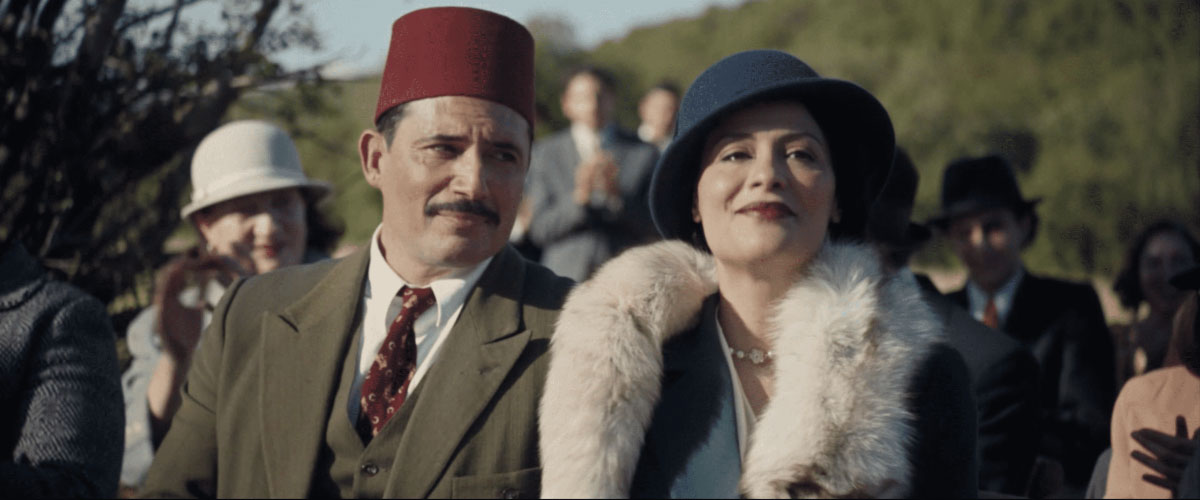
In order to weave together quite dense geopolitical context and fictional plot, Jacir has quite deftly created a patchwork of characters - the young Yousef who hails from a small village, Afra and her family of farmers, Amir, an influential newspaper editor, and his journalist wife Khuloud, Father Boulos, the village priest, the British dignitaries - whose personal intertwined stories play out against the consequences of the factual history.
So little exists in mainstream cinema about this particular period - the Arab peasant revolt, the plan to partition Mandatory Palestine, which helps expose it (and the later the creation of the State of Israel) as "simply" another tendril of Britain’s colonialist enterprises - that Jacir deserves credit for tackling it. Helpfully, the alludes to the earlier Sykes-Picot agreement, which essentially implemented the wider partition of the region and helps shed light on the geopolitics at play today, really driving home the fact that the ongoing wars, occupations, coups, and violence have their roots in political decisions that are only a century old.
Unsurprisingly, and despite weaving so many strands together (including archival footage), Annemarie Jacir does so seamlessly, and although the various protagonists are fairly archetypal, she creates real emotional engagement with their respective destinies, and rouses anger at the cruelty and injustice of the decades that would follow, and that would eventually lead us to what we are witnessing today.